
Category: Pattaya Transport

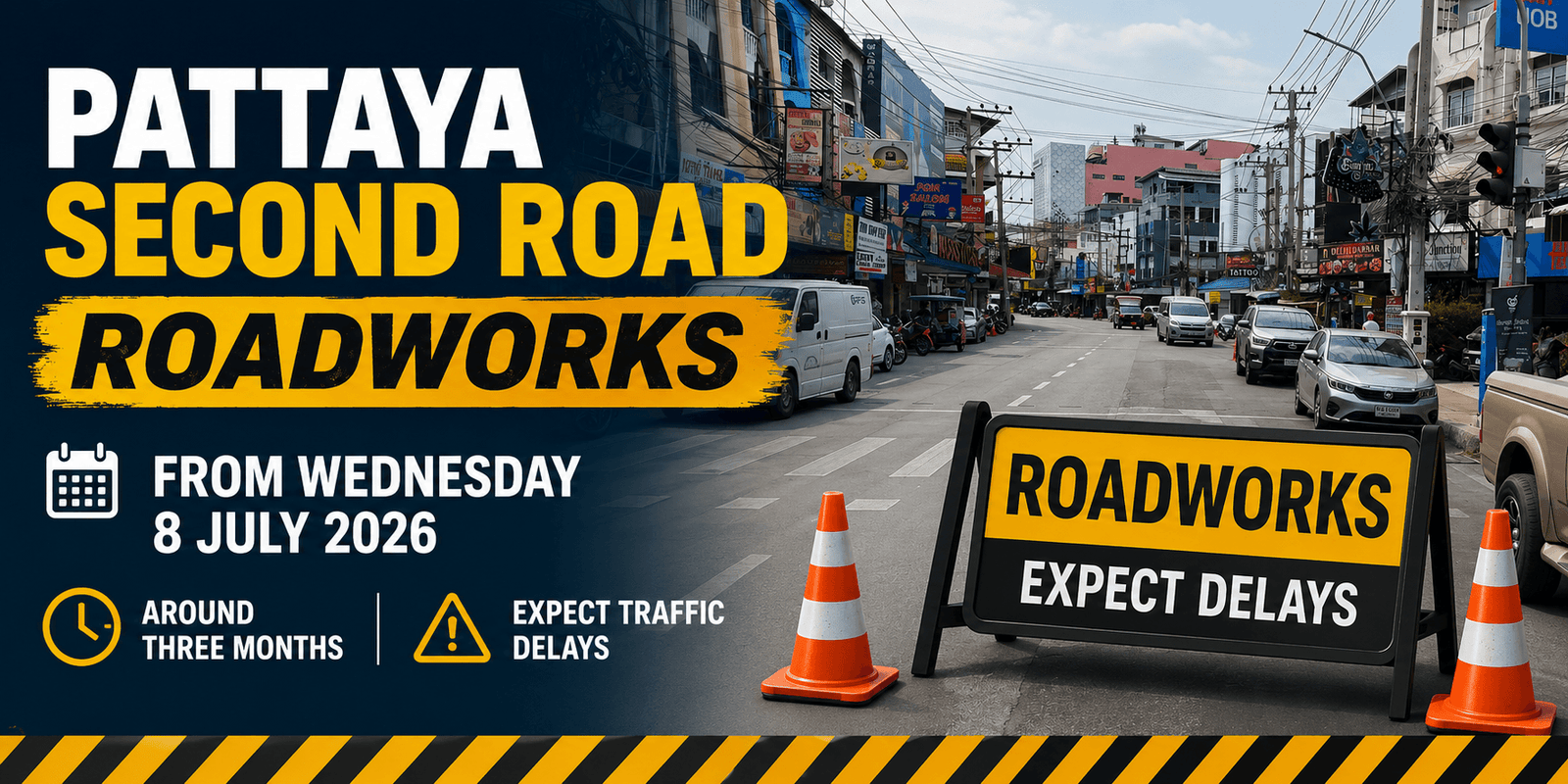
  • Pattaya Second Road Roadworks Begin July 8 – Expect Traffic Delays for Around Three Months

    Pattaya Second Road Roadworks Begin July 8 – Expect Traffic Delays for Around Three Months

    Last updated: 4 July 2026

    Drivers in Pattaya should prepare for traffic delays over the coming months as major roadworks begin on Pattaya Second Road (Pattaya Sai Song Road) from Wednesday 8 July 2026.

    The resurfacing project is expected to take around three months to complete and will affect almost the entire length of one of Pattaya’s busiest roads, from the South Pattaya Road area to the Dolphin Roundabout in North Pattaya.

    While the work is aimed at improving the road surface, motorists, baht bus passengers and businesses along the route can expect disruption during construction.

    Work to Be Carried Out in Two Stages

    To help reduce disruption, the project will be completed in two phases:

    • Stage 1: South Pattaya Road to the Central Festival Pattaya area
    • Stage 2: Central Festival Pattaya to the Dolphin Roundabout

    Pattaya City says the resurfacing will be carried out in stages so traffic can continue to pass through the construction zone while work is underway.

    Expect Traffic Delays and Lane Restrictions

    Although no full road closures have been announced, drivers should expect lane restrictions, slower-moving traffic and delays while the roadworks are underway.

    Pattaya Second Road is one of the city’s busiest routes, carrying a constant flow of cars, motorcycles, taxis and baht buses throughout the day. Congestion is likely to be most noticeable during morning and evening peak periods, as well as weekends and public holidays.

    Visitors using the baht bus route along Second Road should also allow extra travel time, particularly when travelling through Central Pattaya.

    Parking Restrictions During the Roadworks

    Businesses and property owners along Pattaya Second Road have been asked to avoid roadside parking while construction is taking place. Keeping the roadside clear will allow work to progress more efficiently and help minimise disruption to passing traffic.

    Drivers should also avoid parking in affected sections where possible and follow any temporary traffic management or parking restrictions introduced during the project.

    What Drivers Should Know

    If you’re driving around Pattaya between July and October, it’s worth allowing extra time for journeys that use Pattaya Second Road, especially through the central shopping and entertainment districts.

    Alternative routes, including Beach Road and Third Road, may be worth considering during busy periods, although these are also likely to experience heavier traffic while the roadworks are in progress.

    Pattaya City says updates will be provided as construction progresses and different sections of the road are completed. We’ll update this article if any significant changes, traffic arrangements or road closures are announced.
  • Pattaya Baht Bus Fare (2026 Update): What to Expect

    Pattaya Baht Bus Fare (2026 Update): What to Expect

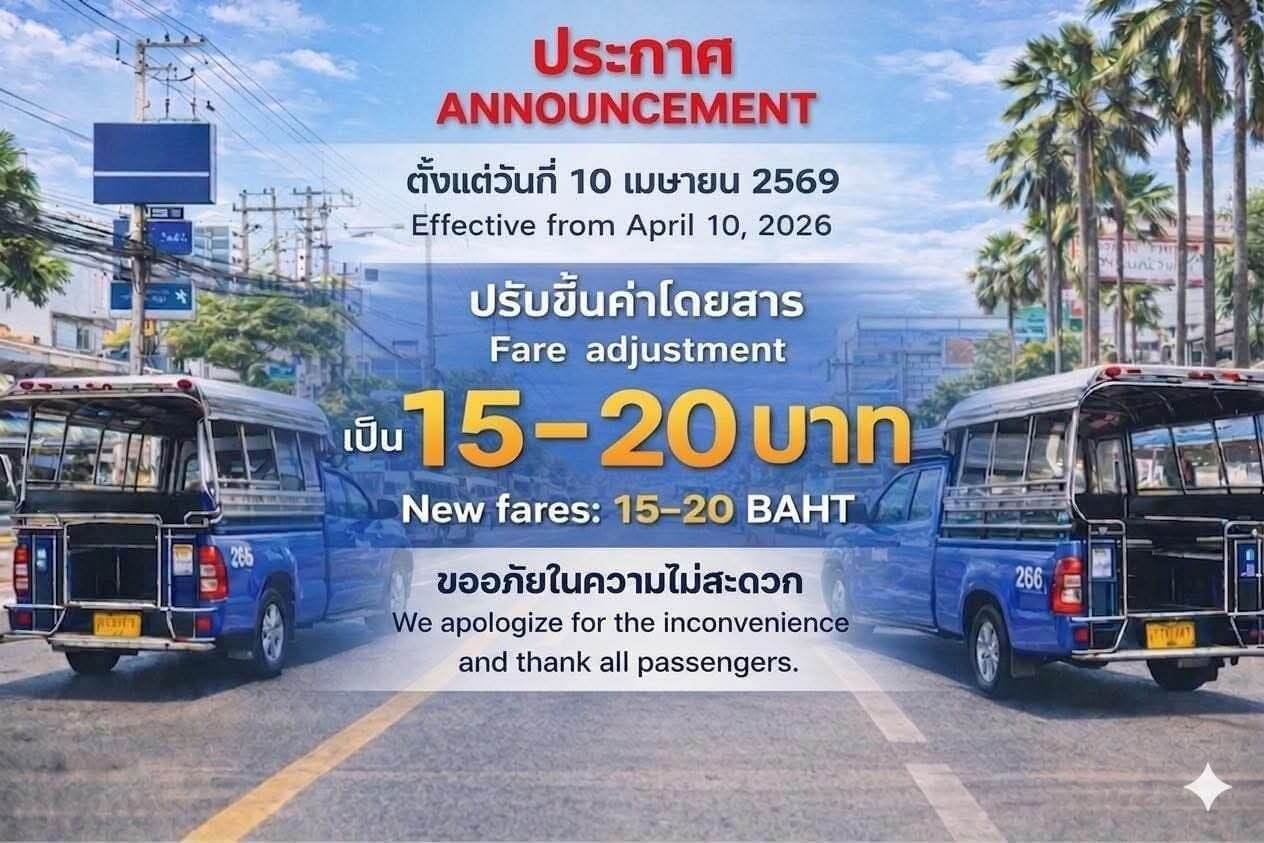
    If you’re planning a trip – or already here – you may have already seen some discussion about the Pattaya baht bus fares increasing.

    As of April 2026, prices have officially been updated. Here’s what that actually means for you.


    Quick Summary

    • Standard baht bus fares are now 15 to 20 baht per trip
    • This is the first increase in over 10 years
    • It’s still the cheapest way to get around Pattaya

    For visitors, this change will have zero impact on your overall costs.


    What Changed?

    Previously, the standard fare for most routes around Pattaya was around 10 baht.

    The new pricing introduces a slightly higher range:

    • 15 baht for shorter trips within central Pattaya
    • 20 baht for longer routes (exact breakdown not yet clearly defined)

    Why the Pattaya Baht Bus Fare Increased

    Operators have cited:

    • Rising fuel costs
    • General increases in operating expenses

    This kind of adjustment has really been expected, given how long prices had remained unchanged.


    What You Should Expect

    In practical terms, not much has changed. The baht bus system still works exactly the same way:

    • Fixed routes along Beach Road, Second Road, and Soi Buakhao
    • No need to negotiate fares on standard shared routes
    • Press the buzzer when you want to get off
    • Pay cash after exiting the vehicle

    If anything, it’s still one of the simplest transport systems you’ll use in Thailand.


    15 or 20 Baht – Which Will You Pay?

    Right now, there’s no completely clear official breakdown of which routes fall into the 15 baht vs 20 baht pricing.

    Based on how the system typically works, it’s likely that:

    • Central Pattaya routes (Beach Road, Second Road, Soi Buakhao) will remain at the lower end
    • Longer routes (such as Pattaya to Jomtien) may fall into the higher range

    However, this may take a little time to fully standardise. We’ll update this page once things become clearer.


    Is It Still Cheap?

    For visitors: yes. Extremely. For locals who rely on it daily, the increase will naturally be felt more.

    • It’s less than 1 USD. In fact, 15 baht is currently under 50c.
    • Still far cheaper than taxis or ride-hailing apps

    For short trips around the city, baht buses remain the best value transport option by far.


    A Bit of Early Confusion Is Normal

    As with any “official” change in Pattaya, there may be:

    • Slight inconsistencies at first
    • Different interpretations between drivers

    This is normal and usually settles quickly. For now, the best approach is simple: don’t overthink it – just pay the standard fare when you get off.


    Final Thoughts

    While the price increase has been widely discussed, it doesn’t change the fact that baht buses are still:

    • Cheap
    • Convenient
    • A core way of getting around Pattaya

    For most visitors, this update is more of a minor adjustment than a real concern.